


 Written by Helen Partzstaff writerEdited by Yohan Yunstaff editor
Brazil’s Halloween eve crypto deadline brings more tricks than treats
Latest NewsPublishedOct 29, 2026
Brazil’s crypto exchanges face an application deadline on Friday, with costly requirements and unanswered regulatory questions complicating compliance.

Cryptocurrency exchanges operating in Brazil face mounting compliance costs and unanswered regulatory questions ahead of a license application deadline.
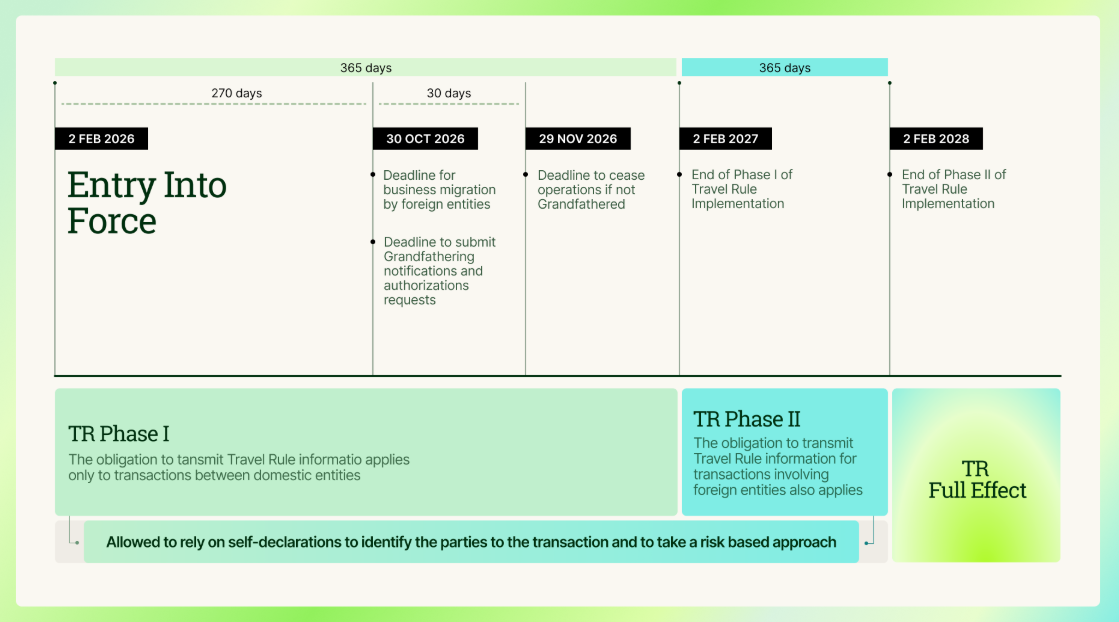
Exchanges already operating in Brazil must apply for authorization by Friday to continue operating, but the cutoff date is just the start of a lengthy compliance process.
“Filing is the easy part,” Fabio Cendão, founding partner at Brazilian law firm FCM Law, told Cointelegraph, pointing to challenges such as high capital requirements, complex compliance obligations and recurring audits.
Brazil introduced its crypto regulatory framework in November 2025, setting rules for exchanges, custodians and other virtual asset service providers under the supervision of its central bank, the Banco Central do Brasil (BCB).
Brazil ranks as the world’s top country for grassroots crypto adoption, recording $252.5 billion in crypto activity between July 2025 and June 2026, according to Chainalysis.
What happens after the deadline?
Crypto platforms that apply on time can continue operating while regulators review their applications, which can take up to two years, according to Cendão.
New entrants must obtain authorization before launching regulated services.
Related: Brazil’s Petrobras uses Cardano to track sustainable aviation fuel, renewable diesel
Companies that miss the deadline must stop providing services within 30 days from Friday, said Marcelo de Castro Cunha Filho, a lawyer at Machado Meyer. From Nov. 6, banks and payment institutions will also face restrictions on conducting crypto transactions with unauthorized providers.
Regulatory questions remain unresolved
Under Brazil’s new rules, crypto service providers must verify the origin and destination of crypto transfers, including those involving self-custodial wallets. The rules also impose a $100,000 limit on certain international crypto transfers when the counterparty is not authorized to operate in Brazil’s foreign exchange market.
Binance Brazil general manager Thiago Sarandy told Cointelegraph that questions remain over how exchanges should identify self-custody wallets, interpret a $100,000 operational limit and determine minimum transaction-reporting thresholds.
“The lack of clarity creates a risky situation,” Sarandy said, warning that exchanges may report fragmented or inconsistent data to the regulatory authorities, which “puts in jeopardy the oversight capacity.”
Related: France proposes liability for crypto exchanges offering DeFi access
Sarandy said industry association ABCripto had submitted questions to the BCB but had yet to receive answers.
Compliance costs threaten smaller exchanges
Major global exchanges have filed applications, including OKX, Binance and Coinbase. Meanwhile, Latin American crypto exchange Bitso is ending direct retail services in Brazil through a partnership with local exchange Mercado Bitcoin.
But smaller operators face a steeper challenge. FCM Law’s Cendão said minimum capital requirements range from 10.8 million Brazilian reais ($2 million) to 37.2 million reais, depending on the services offered, alongside technical certification, custody audits and anti-money laundering controls.
He warned that the costs could make compliance unviable for smaller exchanges, potentially increasing market concentration.
Cunha Filho of Machado Meyer also said it was unclear how exchanges that miss the deadline should return crypto to customers who have no accounts with authorized providers or have not agreed to transfer their assets.
The BCB did not respond to Cointelegraph’s request for comment by publication time.
Magazine: Crypto could outperform AI stocks: Wall Street veteran Jordi Visser


Subscribe to daily byte-sized crypto news from Cointelegraph
Cointelegraph is committed to independent, transparent journalism. This news article is produced in accordance with Cointelegraph’s Editorial Policy and aims to provide accurate and timely information. Readers are encouraged to verify information independently.
More on the subject