


 Written by Zoltan Vardaistaff writerEdited by Robert Lakinstaff editor
Public companies object to OKX-ICE’s tokenized stock plan
Latest NewsPublishedOct 19, 2026
Nine public companies objected to having their shares offered in tokenized form by OKX and ICE, testing whether platforms can create blockchain-based markets without issuer consent.

Nine listed companies have formally objected to having their shares offered in tokenized form on the proposed tokenized stock platform backed by OKX and Intercontinental Exchange (ICE), the parent company of the New York Stock Exchange (NYSE).
The companies included Cerebras Systems, AppLovin, Applied Digital, Rocket Lab, CoreWeave, Verizon Communications, Applied Optoelectronics, Broadcom and UnitedHealth Group, according to a Thursday notice by OKX and ICE.
The notice did not disclose the reason behind the objection. Under the Securities and Exchange Commission’s Sept. 17 innovation exemption announcement, tokenized venues must give issuers written notice and an opportunity to object before listing third-party tokenized stocks.
“Issuers aren’t objecting to the blockchain. They’re objecting to not knowing what happens to their price once it trades there,” Robin Nordnes, CEO of trading validation platform Raiku, told Cointelegraph. “On a public chain, the validator building the block sets the order. Until desks can measure their distance to that point, best execution is a promise, not a number.”
The objections highlight a potential hurdle for tokenized stocks and test whether crypto platforms can create blockchain-based markets for public company shares without issuer cooperation.
Cointelegraph has approached OKX for comment on the ramifications of the objection but had not received a response by the time of publication.
Tokenized stock offerings need more real-world data to address pricing discrepancy concerns
Companies need to see the “upside and a track record of efficient pricing,” Misha Putiatin, co-founder of collateral markets platform Symbiotic, told Cointelegraph, adding that more “real-world data would help everyone assess the benefits and risks.”
He said that additional institutional tokenization initiatives, such as the Depository Trust and Clearing Corporation’s (DTCC) tokenization services, could instill more confidence in tokenized offerings.
Related: Nasdaq-listed Tron sets up $200M ATM share offering to fuel TRX acquisitions
CoinShares’ senior research associate, Luke Nolan, said the objection does not amount to a rejection of tokenization generally, but mostly against being tokenized without consent. He told Cointelegraph:
“This veto also seems to be venue-specific, as in companies being able to say: no, I don’t want them offered on this venue, but I could permit/launch it somewhere else.”
Nolan said the concerns are valid, adding that market participants have previously taken advantage of specific market mechanics to cause “squeezes” or “short-term swings” in the underlying asset’s price.
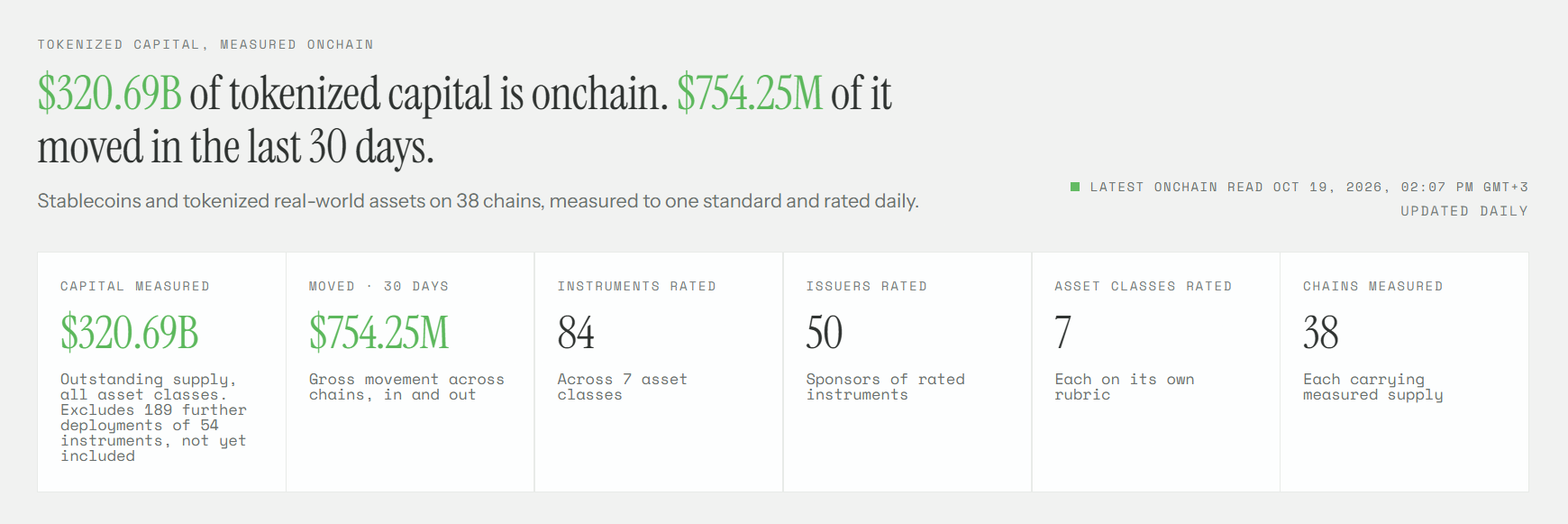
Capital moving onchain during the past 30 days. Source: OnchainBenchmark
More than $754 million in capital has moved onchain during the past 30 days, pushing the total across stablecoins and tokenized assets to $320 billion, according to OnchainBenchmark.
Magazine: How Hong Kong is turning tokenized bonds into real market infrastructure


Subscribe to daily byte-sized crypto news from Cointelegraph
Cointelegraph is committed to independent, transparent journalism. This news article is produced in accordance with Cointelegraph’s Editorial Policy and aims to provide accurate and timely information. Readers are encouraged to verify information independently.
More on the subject